

Bubble Mailer or Box? How to Choose for Your Orders
Decide when to use a bubble mailer or a box. Compare fit, cushioning and rigid protection, with sizing guidance for Sorted Poly Bubb...
Read the guidePlan your moving-house packing supplies by room. Organise fragile items, choose practical roll sizes and keep an essentials box accessible.
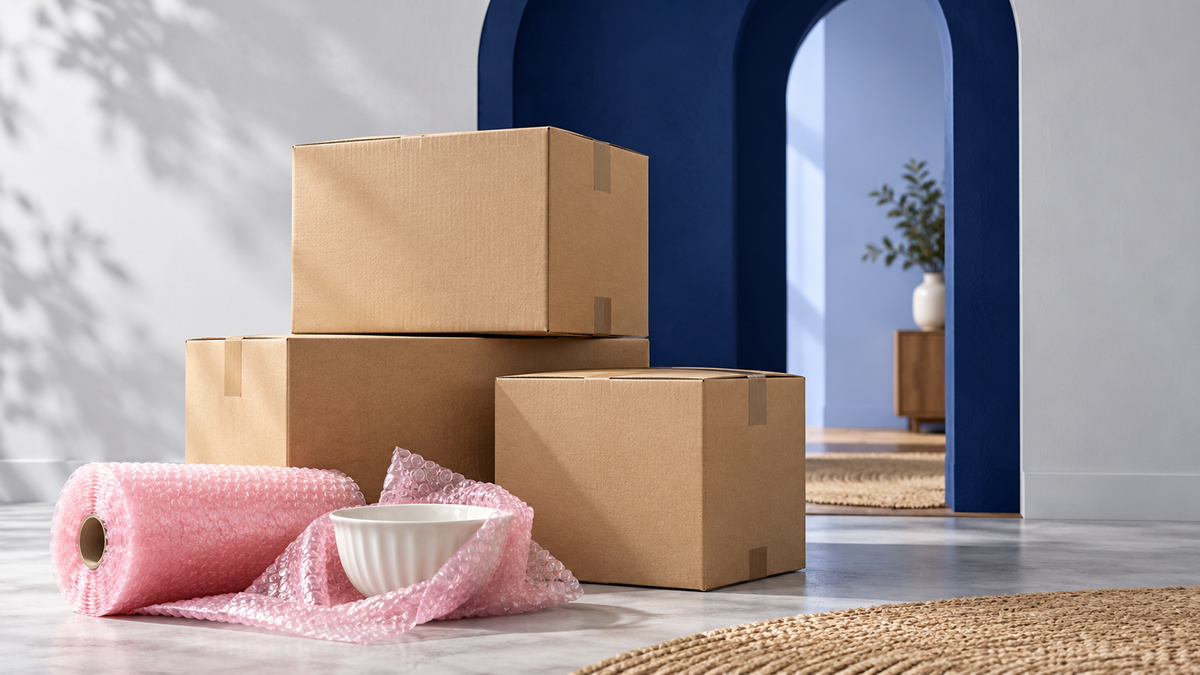
Illustrative cover. Check product pages for exact specifications.
A room-by-room plan makes moving supplies easier to estimate. Start by sorting what will move, then group items by the protection they need. Buy materials for the items you are keeping rather than everything currently in the house.
Set aside suitable moving cartons, cushioning, packing tape, labels, a marker and safe cutting tools. Choose carton sizes you can manage when filled. Reused cartons should be sound, dry and appropriate for the contents.
Keep your packing list simple: item group, carton type, protective material and destination room. Update it after your first few boxes so the rest of the estimate reflects real usage.
Pack delicate kitchen items individually and prevent hard surfaces from touching. Protect vulnerable rims and handles, then use suitable cushioning inside the carton. Avoid a box so heavy or crowded that safe handling becomes difficult.
Do not put heavy cookware loosely beside delicate glasses. Follow the fragile-item packing process and ask your removalist about any special requirements.
Decorative objects, framed pieces and finished furniture may have different wrapping requirements. Follow manufacturer care guidance for delicate finishes and use a suitable interlayer where needed. Adhesive should not be applied directly to a valued surface.
For artwork, unusually fragile pieces or high-value items, arrange appropriate specialist packing. General-purpose wrapping is not a universal solution.
Pack everyday clothing and overnight essentials separately from less-used belongings. Keep small parts from dismantled furniture labelled and associated with the correct item.
Use clear room names and a short contents description. A numbering system can help if several boxes contain similar things: “Bedroom 2, box 3, winter clothes” is more useful than “miscellaneous”.
Wrap a representative item from each fragile group and measure the length used. Multiply by the count, then account for irregular shapes and cutting waste. This is more reliable than estimating by the number of rooms alone.
Coreless Clear Bubble Wrap is available in 5 m and 10 m lengths at 500 mm wide. Compare longer clear rolls if your measured requirement is larger.
Coloured wrapping can help you recognise a room or packing group at a glance. For example, you might choose pink coreless wrap for one destination and clear wrap for another.
Keep written labels as well. Colour should support a clear system, not become the only way someone knows where a box belongs.
Set aside the items you need immediately after arrival and label that box clearly. Keep important documents and valuables under your own control as appropriate. Confirm access, loading and special-item arrangements with the people handling the move.
Prepare your supplies: use our bubble-wrap selection guide, then add carton-sealing tape for suitable moving boxes.
Tell us what you pack, how much you need and where it needs to go.
Talk to Sorted
Decide when to use a bubble mailer or a box. Compare fit, cushioning and rigid protection, with sizing guidance for Sorted Poly Bubb...
Read the guide
Compare clear, brown, Fragile and Top Load packing tape. Check roll lengths, pack quantities and the right handling message for your...
Read the guide
Estimate bubble wrap quantities with a sample-pack method. Calculate roll length, allow for different items and avoid buying by gues...
Read the guide